
Many people know probiotics help with digestion and gut health. But did you know that probiotics can also improve the health of your teeth and gums? Our mouths are filled with bacteria—some helpful, some harmful. When the balance is right, your mouth stays healthy.
But when bad bacteria take over, you can get problems like cavities, gum disease, and bad breath. Probiotics are special “good” bacteria that can help restore balance. New research is uncovering how these tiny helpers may protect your smile in ways that brushing and flossing alone cannot.
If you want to know how probiotics work for your mouth, which strains are best, how to use them safely, and what the science says, you’re in the right place. This article will guide you through everything you need to know about using probiotics for teeth and gums, with real examples and practical advice.
Whether you are struggling with dental issues or just want to keep your smile healthy, understanding oral probiotics could change the way you care for your mouth.
How Oral Probiotics Work
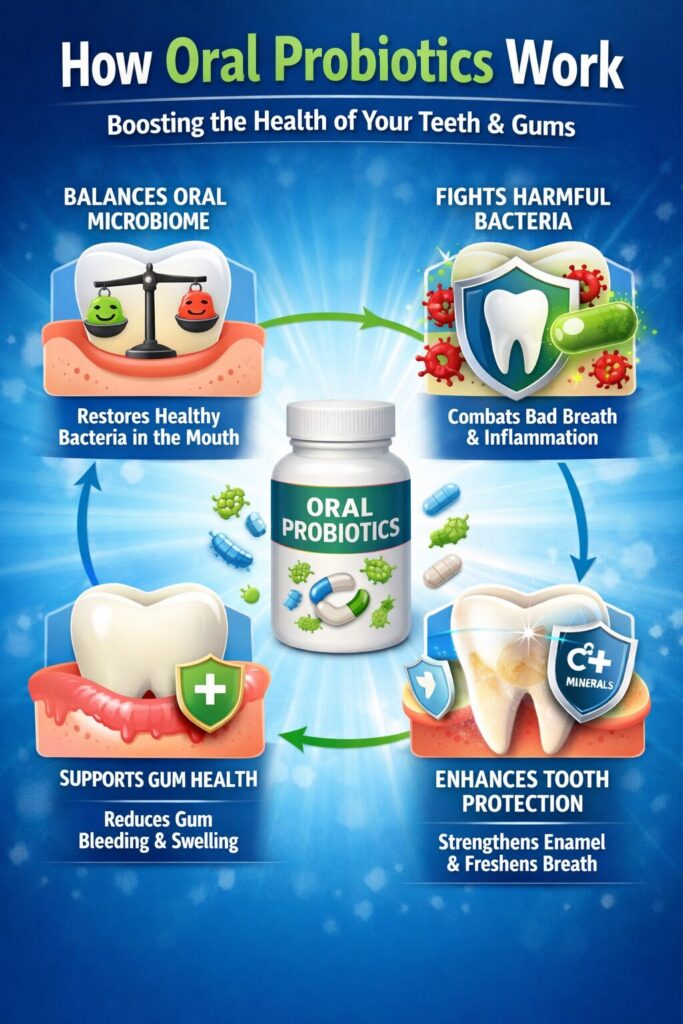
Probiotics are live microorganisms, usually bacteria, that provide health benefits when consumed in adequate amounts. In the mouth, they work by competing with harmful bacteria, sticking to the teeth and gums, and producing substances that limit bad bacteria growth.
When you use oral probiotics, they can:
- Attach to your oral surfaces and crowd out harmful microbes.
- Produce acids and other substances that stop bad bacteria from growing.
- Reduce inflammation and support your body’s natural defenses.
For example, the probiotic strain Streptococcus salivarius K12 can make bacteriocins—natural antibiotics—that target bacteria causing sore throats and bad breath. Another strain, Lactobacillus reuteri, reduces gum inflammation and supports healing.
Unlike antibiotics, probiotics do not kill all bacteria. Instead, they help maintain a healthy balance. This is important because your mouth needs some bacteria to stay healthy.
The Oral Microbiome: Why Balance Matters
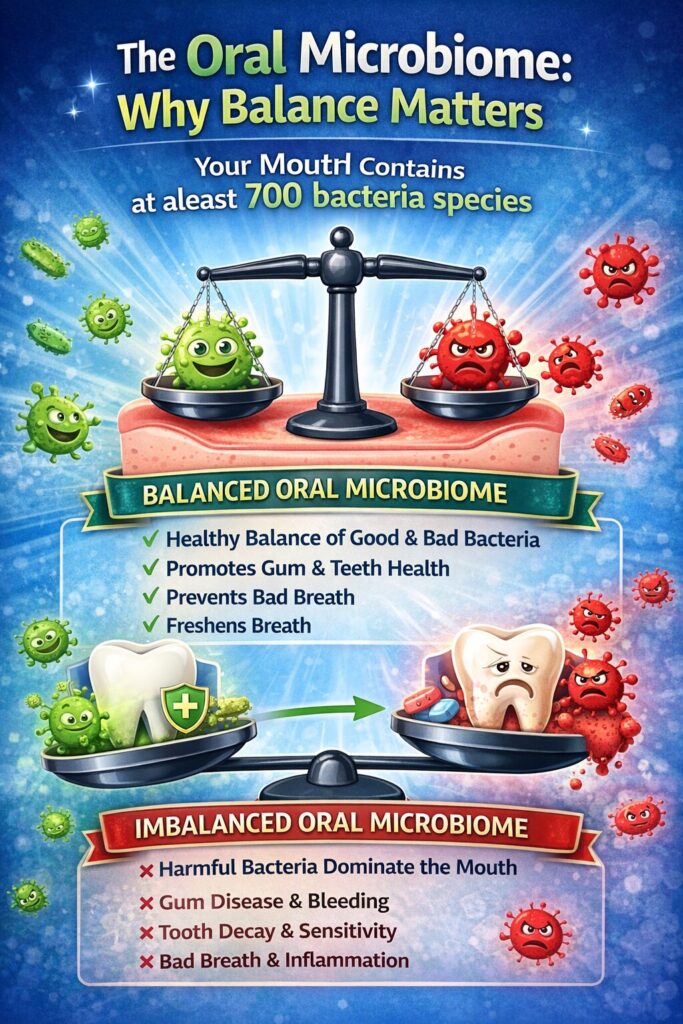
Your mouth is home to over 700 species of bacteria. Some of these are helpful, breaking down food and protecting you from invaders. Others, like Streptococcus mutans and Porphyromonas gingivalis, can cause cavities and gum disease.
A balanced oral microbiome means:
- Healthy gums with less bleeding and swelling
- Fewer cavities and dental decay
- Fresh breath
- Lower risk of oral infections
When the balance is disturbed—by poor hygiene, sugary diets, or antibiotics—harmful bacteria can take over. Probiotics help restore the balance by introducing more friendly bacteria that compete with the harmful ones.
Credit: www.amazon.com
Key Benefits Of Probiotics For Teeth And Gums
Many studies have looked at how probiotics can help different aspects of oral health. Here are the main benefits:
1. Reduce Gum Disease (gingivitis And Periodontitis)
Gum disease starts with inflammation caused by bacteria. Early stages (gingivitis) cause red, swollen gums that bleed easily. If untreated, it can progress to periodontitis, where gums pull away from teeth and bone loss can occur.
Probiotics can help by:
- Lowering levels of harmful bacteria (like P. gingivalis)
- Reducing inflammation and bleeding
- Supporting healing of gum tissue
A 2020 review found that people who used probiotic lozenges or supplements had less gum bleeding and swelling. Lactobacillus reuteri and Lactobacillus brevis are especially helpful.
2. Prevent Cavities
Cavities happen when bacteria in your mouth produce acids that destroy tooth enamel. Streptococcus mutans is the main culprit.
Probiotics can:
- Compete with and reduce S. mutans levels
- Lower acid production
- Increase saliva’s ability to protect teeth
For instance, Streptococcus salivarius M18 releases enzymes that help break down dental plaque and reduce cavity risk.
3. Fight Bad Breath (halitosis)
Bad breath is often caused by bacteria that produce sulfur compounds. Probiotics can reduce these bacteria and improve breath.
A study found that people who took S. salivarius K12 had fresher breath for weeks compared to those who did not. The effect lasted as long as they continued using the probiotic.
4. Help With Oral Thrush And Yeast Infections
Oral thrush is a yeast infection caused by Candida albicans. This can happen after antibiotics or in people with weak immune systems.
Probiotics like Lactobacillus rhamnosus and Lactobacillus casei can:
- Lower levels of Candida in the mouth
- Reduce symptoms and speed healing
5. Support After Dental Procedures
After dental cleanings, surgeries, or treatments, your mouth can be vulnerable. Probiotics may:
- Help wounds heal faster
- Lower risk of infection
- Reduce pain and swelling
For example, using a probiotic mouth rinse after a tooth extraction can reduce swelling and speed recovery.



Most Effective Probiotic Strains For Oral Health
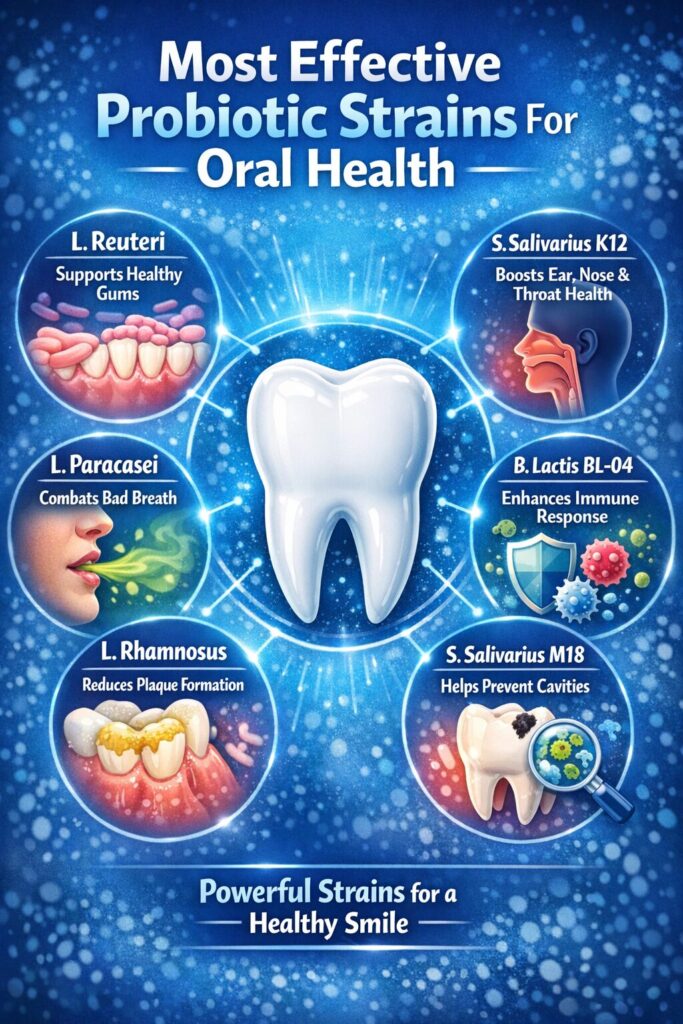
Not all probiotics are the same. Some strains are better for the gut, while others are more active in the mouth. Here are the most studied and beneficial strains for teeth and gums:
| Probiotic Strain | Main Benefits | Common Sources |
|---|---|---|
| Streptococcus salivarius K12 | Reduces bad breath, throat infections | Lozenges, oral tablets |
| Streptococcus salivarius M18 | Prevents cavities, supports gum health | Lozenges, oral tablets |
| Lactobacillus reuteri | Reduces gum inflammation, supports healing | Capsules, yogurt, supplements |
| Lactobacillus brevis | Reduces gum bleeding and swelling | Supplements, some fermented foods |
| Lactobacillus rhamnosus | Fights oral thrush, supports immune health | Supplements, yogurt |
| Lactobacillus casei | Fights yeast, supports oral healing | Supplements, dairy products |
If you choose a probiotic for your mouth, look for these strains on the label. Products made for oral health will often highlight them.
How To Use Probiotics For Teeth And Gums
You can use oral probiotics in several ways:
- Lozenges and Chewable Tablets: Let them dissolve slowly in the mouth so the good bacteria can stick to teeth and gums.
- Probiotic Mouth Rinses: Swish in the mouth for 30–60 seconds, then spit out. Useful after brushing or dental treatments.
- Supplements: Swallowing capsules or powders may help, but direct contact with the mouth is more effective for oral benefits.
- Fermented Foods: Yogurt, kefir, and some cheeses can provide general probiotic support, but may not have the exact strains for oral health.
For best results:
- Use the product daily for at least 2–4 weeks.
- Take after brushing teeth, before bed, or as directed.
- Avoid eating or drinking for 30 minutes after use.
Some people also use probiotic toothpaste or mouth sprays. These are newer and may help, but always check for well-studied strains.
Comparing Oral Probiotics To Regular Dental Care
Traditional dental care focuses on brushing, flossing, and regular cleanings. Probiotics are not a replacement, but they add another layer of protection.
Let’s compare the approaches:
| Method | Main Action | Strengths | Limitations |
|---|---|---|---|
| Brushing & Flossing | Removes plaque, food particles | Prevents buildup, easy to do | Cannot change bacteria balance long-term |
| Mouthwash (antibacterial) | Kills bacteria (good & bad) | Reduces bacteria quickly | May harm good bacteria, temporary effect |
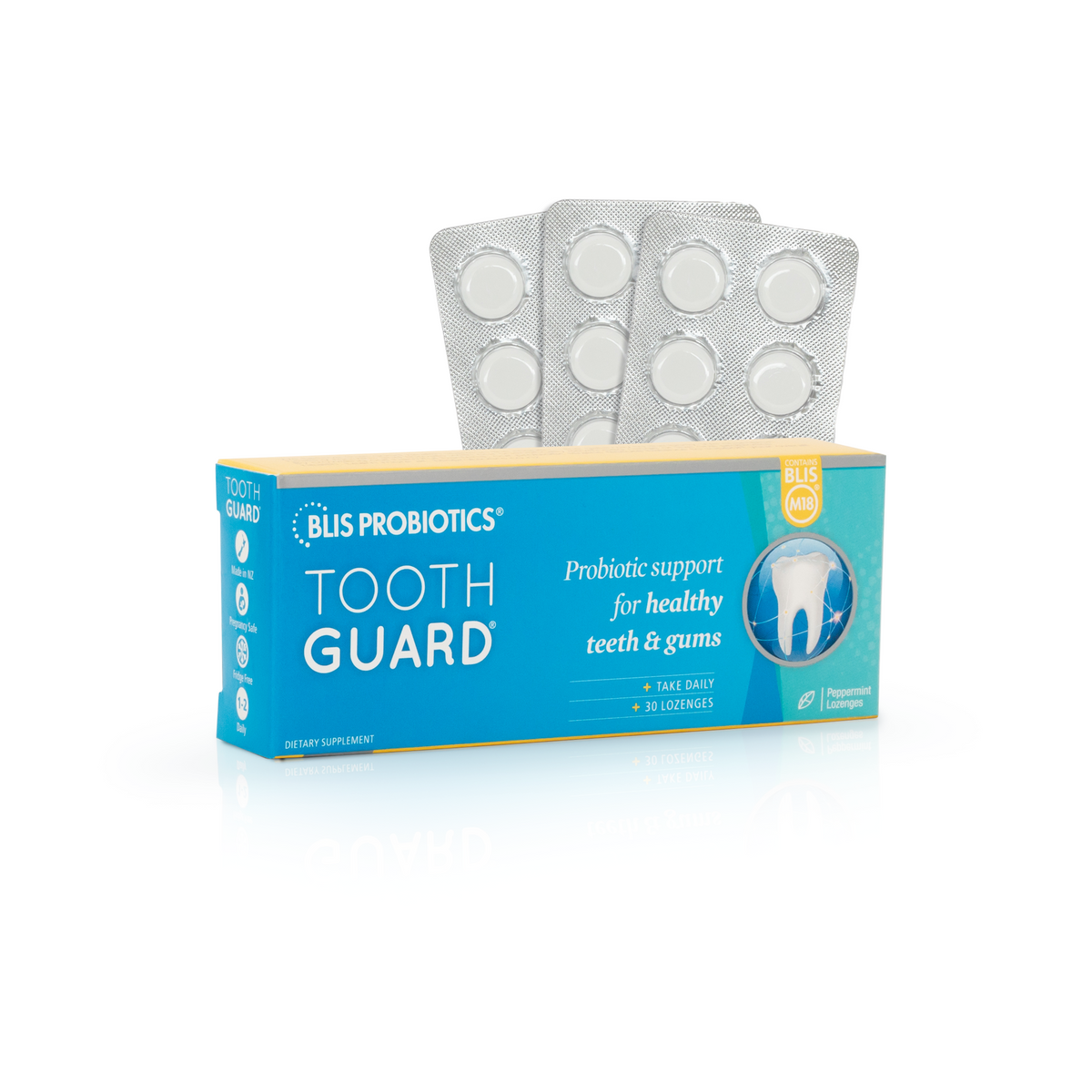
| Probiotics | Adds good bacteria, restores balance | Supports natural defenses, gentle | Needs regular use, results take time |
For best results, combine regular dental care with targeted oral probiotics.
Credit: blisprobiotics.co.nz
https://7d6d483hw7nf2qfkzni6ssqh0t.hop.clickbank.netWhat The Science Says: Research And Results
Probiotics for oral health is a newer field compared to gut health, but studies are promising. Here are some key findings:
- Gum Health: A 2021 clinical trial found that people using L. reuteri lozenges for 8 weeks had 40% less gum bleeding compared to a placebo.
- Cavity Prevention: A 2019 review showed that S. salivarius M18 reduced new cavities by up to 50% in children with high risk.
- Bad Breath: In a study, 85% of people using S. salivarius K12 lozenges had improved breath after one week.
- Oral Thrush: Probiotics reduced symptoms of thrush in elderly people after just 14 days of use.
It’s important to note that not everyone responds the same way. Factors like age, diet, oral hygiene, and genetics can affect results.
Who Should Consider Oral Probiotics?
Probiotics for teeth and gums can help many people, especially:
- Those with frequent gum problems or sensitive gums
- People with recurring cavities or high cavity risk
- Anyone with chronic bad breath
- Denture wearers or those with dental implants
- People after dental surgeries or extractions
- Those who use antibiotics (to restore oral balance)
If you have a healthy mouth, probiotics can still help maintain balance and prevent future problems.
Safety And Side Effects
For most people, oral probiotics are safe. The bacteria used are natural and often found in healthy mouths. However, a few things to keep in mind:
- Mild side effects: Some people may notice temporary bloating or gas, especially when starting.
- Allergies: Check labels for dairy or soy if you have allergies.
- Immune issues: People with weak immune systems or those undergoing chemotherapy should talk to a doctor first.
Unlike antibiotics or strong mouthwashes, probiotics do not usually cause major side effects. Still, always follow package instructions and consult your dentist if unsure.
How To Choose A Good Oral Probiotic Product
With so many products on the market, choosing the right oral probiotic can be confusing. Here’s what to look for:
- Correct strains: Look for strains proven for oral health, like S. salivarius K12 or L. reuteri.
- Adequate dose: Most studies use 1–2 billion CFUs (colony-forming units) per day.
- Delivery method: Lozenges or chewables are best for direct contact with teeth and gums.
- Minimal sugars: Avoid products with added sugar, which can harm teeth.
- Reputable brand: Choose brands with transparent labeling and quality controls.
If possible, choose products that have been tested in clinical studies. Your dentist may also recommend specific brands.
Tips For Getting The Most Out Of Oral Probiotics
- Consistency matters: Use the product daily for at least one month.
- Combine with good hygiene: Keep brushing and flossing as usual.
- Limit sugars: Sugary foods feed harmful bacteria, so cut back for best results.
- Stay hydrated: Saliva helps probiotics work by spreading them throughout your mouth.
- Store correctly: Some probiotics need refrigeration. Check the label and keep them away from heat and moisture.
Many people stop using probiotics too soon or expect instant results. Give it time—most benefits appear after a few weeks.
Real-world Example: Anna’s Story
Anna, a 34-year-old office worker, struggled with bleeding gums and bad breath. She brushed and flossed daily but still had problems. Her dentist suggested trying a probiotic lozenge with S. salivarius K12 and L. reuteri.
After four weeks of daily use:
- Her gum bleeding reduced by 70%
- Bad breath improved significantly
- Dental checkup showed less plaque and better gum health
Anna continued using the probiotic and kept up her brushing and flossing. After three months, her gums were healthy, and she felt more confident about her breath.
This is just one example, but many people report similar improvements with regular use.
Common Myths And Mistakes
Despite growing popularity, there are some myths about oral probiotics:
- Myth: “Any probiotic will help my teeth.”
*Fact:* Only certain strains work in the mouth. Gut probiotics may not help oral health.
- Myth: “Probiotics replace brushing and flossing.”
*Fact:* Probiotics support, but do not replace, daily hygiene.
- Myth: “You need to take high doses for results.”
*Fact:* More is not always better. The right strain and delivery are more important than high doses.
- Myth: “Results are instant.”
*Fact:* Most people see changes after a few weeks, not days.
Oral Probiotics For Children
Children are often at higher risk for cavities and gum problems, especially if they eat sugary foods or dislike brushing.
Probiotics can be safe for kids, but always check with a pediatric dentist first. Look for products designed for children, with lower doses and appropriate strains like S. salivarius M18.
In a study, children who used probiotic lozenges for 3 months had 40% fewer new cavities than those who did not. Benefits for children include:
- Fewer dental visits for cavities
- Healthier gums
- Better breath
Never give adult products to children without professional advice.

Oral Probiotics And Diet: What To Eat For A Healthy Mouth
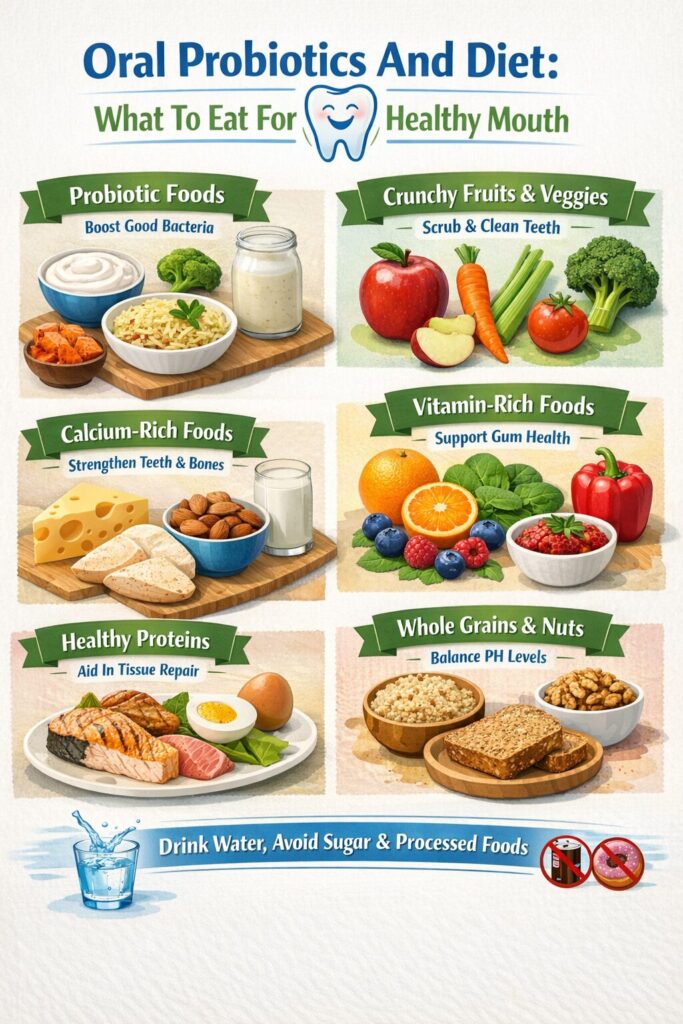
While probiotics can help, diet also plays a big role in oral health. Here are some foods that support a healthy oral microbiome:
- Yogurt and kefir: Contain live probiotics and calcium
- Cheese: Increases saliva, protects tooth enamel
- Leafy greens: High in fiber, stimulates saliva
- Crunchy fruits and vegetables: Apples, carrots, and celery clean teeth and provide vitamins
Limit:
- Sugary drinks and snacks
- Sticky candies
- Acidic foods that erode enamel
Eating a balanced diet helps probiotics work better and keeps harmful bacteria in check.
Comparing Oral Probiotics: Product Examples
With many brands on the market, here’s a quick comparison of three popular oral probiotic products:
| Brand/Product | Main Strains | Form | Best For |
|---|---|---|---|
| BLIS K12 | S. salivarius K12 | Lozenge | Bad breath, throat health |
| PRO-Dental | S. salivarius K12, M18, L. reuteri | Chewable tablet | Overall oral health |
| NatureWise Oral Health | L. reuteri, L. paracasei | Capsule | Gum support, inflammation |
Check product labels and consult your dentist to find the best option for your needs.
Latest Trends: Probiotics In Toothpaste And Mouthwash
Some companies now add probiotics to toothpaste and mouthwash. The idea is to deliver beneficial bacteria directly where they are needed.
- Probiotic toothpaste: Can reduce plaque, freshen breath, and support gum health.
- Probiotic mouthwash: May help after dental procedures or for those with sensitive gums.
However, research is still ongoing. It’s best to use these as part of an overall routine, not as your only source of probiotics.
When To See A Dentist
Probiotics are a helpful tool, but they are not a cure for serious dental problems. See your dentist if you have:
- Ongoing pain or swelling
- Loose teeth or bleeding gums that do not improve
- White patches (possible thrush) that last more than a week
- Dental infections or abscesses
Probiotics work best for prevention and mild problems—not for emergencies.
Where To Find Quality Research
Frequently Asked Questions
What Are The Best Probiotic Strains For Oral Health?
The best strains for oral health are Streptococcus salivarius K12, Streptococcus salivarius M18, Lactobacillus reuteri, and Lactobacillus brevis. These have been shown to fight bad bacteria, reduce gum inflammation, and prevent cavities.
Can I Use Regular Yogurt For My Teeth And Gums?
Yogurt contains some probiotics and can help overall health, but it may not have the strains proven for oral benefits. Look for products with S. salivarius or L. reuteri for best results.
How Long Does It Take For Oral Probiotics To Work?
Most people notice improvements in 2–4 weeks if they use probiotics daily. Gum health and breath may improve first, while cavity prevention takes longer.
Are Oral Probiotics Safe For Children And Seniors?
Yes, most oral probiotics are safe for both children and seniors. Use products designed for the right age group and consult a dentist if you have health concerns.
Do I Need To Take Oral Probiotics Forever?
You do not need to take them forever, but benefits last as long as you use them regularly. If you stop, your oral bacteria may return to previous levels over time.
Taking care of your teeth and gums is about more than just brushing. Oral probiotics add a new level of protection, supporting your body’s natural defenses. With the right products and good habits, you can keep your smile healthy for years to come.
Leave a Reply